

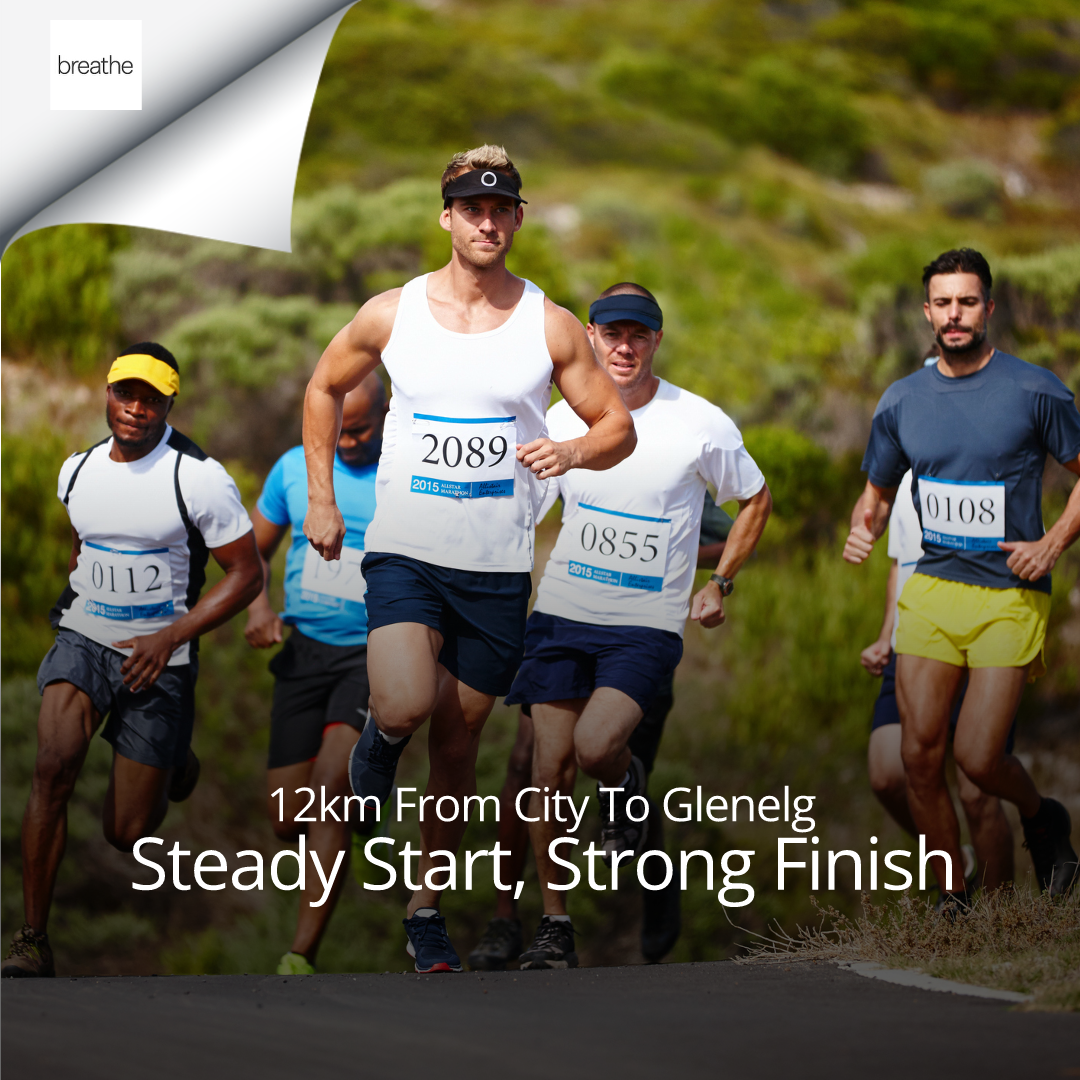
Preparing for the City-Bay Fun Run is about more than ticking off kilometres. A smart plan combines steady running, practical recovery, nutrition, sleep and mental health habits so you arrive at the start line confident and finish feeling proud. For Adelaide runners, Breathe WRL in Glenelg East offers recovery-focused services that can support your preparation before and after the run when used thoughtfully as part of a balanced routine.
Runners should focus on consistency, recovery and race-day readiness rather than cramming extra kilometres late in the program. The City-Bay Fun Run main course is a 12km event starting near Festival Theatre on King William Road and finishing at Colley Terrace in Glenelg (https://city-bay.org.au/). That CBD-to-coast format makes the event exciting but it also rewards pacing, hydration and calm decision-making.
If you are preparing for the 12km run be sure to build a routine that lets you comfortably cover the distance before race day. If you are entering the 3km, 6km or half marathon, adjust the same principles to your current fitness and experience. The goal is not to train perfectly; it is to train well enough, often enough, with enough rest to absorb the work.
A good health and wellness for runners plan starts with a weekly rhythm you can actually maintain. Most recreational runners benefit from a mix of easy runs, one slightly harder session, one longer run, strength work and rest. The mistake many people make is turning every run into a test, which can leave the body tired and the mind flat.
Try structuring your week around purpose:
For the City-Bay course, practise running at a controlled pace from the start. Big events can make runners surge early, especially when the crowd is moving quickly. Use training to learn what “comfortable but focused” feels like, then save your strongest effort for the final kilometres into Glenelg.
Recovery is not what happens when training stops; it is what turns training into progress. Sleep, food, hydration, mobility and lower-stress days help muscles repair and energy return. Without them, even the best fitness tips can become another source of pressure.
A useful recovery checklist includes:
Race week is not the time to prove your toughness. It is the time to sharpen, freshen up and trust the work that you have already done.
Running can be a powerful support for mental health but preparation can also bring nerves, comparison and pressure. Physical activity is associated with benefits such as reduced anxiety, improved sleep and lower risk of depression but it should sit alongside other supports when life feels heavy (https://cdc.gov/index.html).
Use training as a grounding routine, not a punishment. If you miss a session, adjust the plan and continue. If you feel anxious before race day, rehearse simple cues such as “steady start”, “relax shoulders” and “one kilometre at a time”. These small anchors can help you stay present when the crowd, noise and anticipation build.
It also helps to define success broadly. A great City-Bay experience may mean a personal best but it may also mean running the whole way, walking with a friend, fundraising, returning after injury or simply enjoying the road to Glenelg.
Breathe WRL can support your recovery by giving runners access to services designed around rest, circulation, relaxation and post-training reset. Our services include compression therapy, private infrared sauna, float therapy, full body cryotherapy, localised cryotherapy and red light therapy, with the studio located at Shop 3, 4 Brighton Road Glenelg East (https://breathewrl.com.au/contact). For runners finishing in Glenelg, that makes it a practical option to consider as part of a post-event recovery plan.
The key is to match the service to the moment. Recovery tools should complement training, not replace good sleep, sensible progression, medical advice or physiotherapy when needed.
Your nutrition plan does not need to be complicated. Eat familiar foods, avoid major experiments in the final week and consider breakfast before key training runs. For many runners, a simple carbohydrate-based meal a few hours before the event works well but personal tolerance matters.
During the race, comfort is the priority. Wear shoes and socks you have already tested, choose clothing that does not rub and check weather conditions before leaving home. The official 12km event information notes drink stations at the finish line, participant medals, transport inclusions and post-race celebrations around Wigley and Colley Reserve (https://city-bay.org.au/). Still, you should review the latest race-day guide before the event because logistics can change.
Book recovery when it helps you feel better without disrupting your normal rhythm. If you are new to a service, try it earlier in training rather than during the final days. Race week should feel familiar, calm and predictable.
A simple approach could look like this:
If you are managing injury, illness, pregnancy, a heart condition, blood pressure concerns or any other medical issue, check with a qualified health professional before using heat, cold or compression-based services.
The final fortnight is about arriving fresh. You can reduce your running volume while keeping a little intensity, such as a few short strides or a controlled tempo segment. This reminds the body how to move efficiently without adding unnecessary fatigue.
Keep these fitness tips close:
The City-Bay is a memorable Adelaide to Glenelg running experience because it blends personal challenge, community energy and a clear destination: the coast. The best preparation respects the whole runner, including training, recovery, nutrition, sleep and mental health. With a practical plan and carefully chosen recovery support from Breathe WRL, you can give yourself a better chance of reaching Glenelg feeling strong, steady and satisfied.
Treat the event as both a goal and a reward. Train consistently, recover deliberately and enjoy the journey from the Adelaide CBD to the bay.
As you build towards City-Bay, it's also a great time to make recovery part of your regular routine. Our Get Fit For Summer promotion makes it easier to try compression therapy, sauna and cryotherapy as you train. Book your session here and give your training the recovery support it deserves.


